
Question

Need Help - Make.com + Airtable Deal Intake Implementation

  • January 27, 2026
  • 10 replies
  • 126 views

Forum|alt.badge.img+1

Make.com + Airtable Deal Intake Implementation (Offshore Preferred)

Project
We are an investment firm implementing a deal intake and triage workflow using Make.com and Airtable. We already have a detailed internal spec; your job is to implement and harden it, not design from scratch.

What we’re building

  • single intake pipeline that captures new deals from multiple sources (email forwards, forms, manual CRM entries) via a Make.com webhook.

  • normalization and de‑duplication layer that:

    • Cleans core fields (company name, domain, etc.).

    • Checks Airtable for an existing deal based on company/domain.

  • Two main flows in Make.com:

    • New deals

      • Enrich company data.

      • Call AI to structure messy input into a clean JSON “deal object”.

      • Score mandate fit and suggest next step.

      • Create the deal in Airtable, log the intake event, assign an owner, and send notifications.

    • Existing deals

      • Enrich/refresh.

      • Re‑score via AI.

      • Update the existing deal record.

      • Log a new intake event.

Key components

  • Airtable base as a lightweight CRM, with:

    • Deals table (identity, classification, status, scoring, ownership).

    • Intake Logs table (one row per scenario run, for audit/debugging).

  • Make.com scenario that includes:

    • Webhook trigger and normalization step.

    • Airtable search and routing (new vs existing deal).

    • HTTP calls to enrichment services.

    • Two AI calls:

        1. Structure messy input into a clean JSON “deal object”.

        1. Score mandate fit and suggest recommended next step.

    • Structured writes back to Airtable and routing based on score.

    • Slack/email notifications and basic error handling.

What we will give you

You will not design this from scratch. After selection, you’ll receive a private implementation guide that includes:

  • Exact Airtable schema (fields, types, relationships).

  • Module‑by‑module instructions for the Make.com scenario.

  • AI prompt templates and mandate configuration structure.

  • A testing checklist with sample payloads and expected outcomes.

This document is internal IP and only shared after selection.

What success looks like

  • A working Make.com scenario wired to Airtable, following the provided design.

  • New and existing deals flow correctly, with:

    • Enrichment, AI structuring, scoring, and routing working end‑to‑end.

  • All defined test cases executed and passing, including:

    • Duplicate submissions.

    • Sparse / low‑info deals.

  • Clear, queryable logs in Airtable for each intake run.

  • Notifications firing as expected.

  • Workflow is robust to common failure modes (API issues, missing data, malformed payloads).

Your role is to faithfully implement and harden this workflow from the spec, then validate it through tests — not to invent a new architecture.

Required experience

  • Strong, hands‑on experience with Make.com (or Integromat), including:

    • Webhooks, routers/branching, iterators/arrays.

    • HTTP modules for APIs and enrichment services.

    • Error handling, retries, and logging.

  • Good working knowledge of Airtable:

    • Designing or working with linked tables.

    • Using the Airtable API from Make.com.

  • Experience connecting AI / LLM APIs (OpenAI, etc.) into workflows is a plus.

  • Comfortable reading and working from a detailed technical specification.

Offshore / non‑US candidates are welcome and preferred for this project.

Application instructions (must answer all 3)

Please respond with specific, concrete examples:

  1. Make + Airtable example

    • Send a Loom video or screenshots of at least one Make.com scenario you’ve built that:

      • Starts from a webhook or form.

      • Calls an external API (enrichment or AI).

      • Writes structured data into Airtable.

  2. Similar workflow experience

    • Briefly describe at least two prior workflows you implemented that are similar to this project, e.g.:

      • “Webhook → normalization → enrichment → AI → Airtable/CRM.”

      • “De‑dupe by company/domain and update or create a record.”

  3. Rate, time zone, availability

    • Your hourly rate (USD) or fixed‑price expectation for an MVP implementation.

    • Your time zone and typical working hours.

    • How many hours per week you can commit in the next 4–6 weeks.

Applications that don’t address all three points will not be considered.

10 replies

Philip_Ade
Forum|alt.badge.img+3
  • Participating Frequently
  • January 27, 2026

Hello ​@William_Cavalier  , I’ve built multiple production n8n and Make.com workflows very similar to this: webhook or email intake > normalization > de-duplication by company/domain > enrichment via HTTP APIs > AI structuring and scoring > structured writes back to Airtable with audit/log tables and notifications.

I can share a short Loom showing a webhook-triggered scenario that calls enrichment + OpenAI and writes clean JSON objects into an Airtable CRM. I’ve also implemented deal/lead intake systems where existing records are refreshed and rescored instead of recreated, with full logging and error handling.

I’m UTC+1, available 40 hrs/week over the next month, and can work hourly or fixed-price for an MVP.

You can scheduke a call with me here so I can show you some of my work also to discuss how we can work together to achieve your goals.


Forum|alt.badge.img+1

Philip,

Subject: Deal Intake & Triage Automation – Final Stage Questions (Make + Airtable)


Thanks for your interest in this project. Below is an overview of what we’re building and a focused set of questions to understand how you work with Make.com and Airtable on real client workflows.


Project context (brief)

We are implementing a deal intake and triage workflow for an investment firm using Make.com and Airtable as the primary tools. The workflow will:

  • Ingest deals from multiple sources into a single intake pipeline (email forwards, forms, manual CRM entries) via a Make webhook.
  • Normalize and de‑duplicate deals using company name and domain against Airtable.
  • Run two main flows:
  • New deals: enrichment, AI “deal profile,” AI mandate scoring, create in Airtable, log intake, assign owner, notify team.
  • Existing deals: refresh/enrich, re‑score via AI, update deal, log intake.
  • Use Airtable as a lightweight CRM (Deals + Intake Logs) with clear audit history for each intake run.


You will receive a detailed internal implementation guide after selection (Airtable schema, Make scenario steps, AI prompts, test cases). Your job is to implement and harden the design, not to invent a new architecture.


Final stage interview questions

1) Working from a detailed spec

  1. Tell me about a project where a client gave you a very specific Airtable schema and Make scenario outline. How did you approach implementation and where, if at all, did you deviate from the spec?
  2. When you disagree with a client’s architecture, how do you handle that while still delivering what’s in the document?


2) Make scenario: webhook, normalization, routing

  1. Imagine a Make scenario starts with a webhook that receives messy deal payloads from different sources (emails, forms, manual entries). How would you normalize key fields like company name and domain before any other steps?
  2. How would you structure the Airtable “search and route” step so the scenario can reliably decide whether this is a new deal or an existing one (using company/domain), including handling multiple matches or Airtable errors?


3) Enrichment, AI calls, and scoring

  1. Suppose you have a partially structured payload. How would you orchestrate:
  • HTTP calls to enrichment services,
  • an AI call that returns a clean JSON “deal object,” and
  • a second AI call that scores mandate fit and suggests a next step?
  1. What is your approach when an AI response is malformed (e.g., invalid JSON, missing fields)? How do you validate and fail gracefully before writing to Airtable?


4) Airtable CRM structure and intake logs

  1. For this use case, how would you structure an Airtable base with a Deals table and an Intake Logs table? What key fields and relationships would you set up so every intake run is auditable, even for duplicates?[airtable]​
  2. How would you design the Intake Logs records so that we can quickly debug any given run (e.g., see source, payload snapshot, outcome, and errors)?


5) Error handling, resilience, notifications, and ownership

  1. Describe how you typically handle errors and transient failures in Make (e.g., enrichment or AI rate limits, Airtable downtime) so the workflow is robust without creating duplicate records.
  2. How would you implement Slack/email notifications so that:
  • Deal owners are notified of new or updated deals, and
  • Operations is alerted when runs fail or hit unusual edge cases?
  1. If you needed to assign a deal owner (round‑robin or rules‑based), where would you store that configuration and how would your Make scenario use it?


6) Testing and validation

  1. If we provide you with a test checklist and sample payloads (new company, exact duplicate, new deal from existing company, sparse data, malformed data), how would you execute and document these tests?
  2. What additional test cases would you add before calling this workflow “production‑ready,” and how would you use Airtable views/filters to verify that Deals and Intake Logs match the expected outcomes?


If this still sounds like a good fit, please answer these questions with concrete examples from your past Make/Airtable work (screenshots or redacted structures are helpful but not required).


Philip_Ade
Forum|alt.badge.img+3
  • Participating Frequently
  • January 27, 2026

1) Working from a spec
I’ve implemented several n8n/Make + Airtable/CRM systems where schemas, scenarios, and prompts were fully defined upfront. I follow the spec exactly first, get all test cases passing, then flag improvements separately. If I disagree with an architectural choice, I still deliver what’s documented and note risks or alternatives without changing scope.

2) Webhook, normalization, routing
I normalize immediately after the webhook (cleaned company name, extracted/normalized domain, raw vs normalized fields). Routing is domain-first, name-second, with explicit paths for zero, single, or multiple matches. Multiple matches or Airtable errors always log and exit safely no auto-writes.

3) Enrichment & AI
Enrichment → AI structuring → AI scoring, all staged in variables. AI output is validated (required keys + JSON parse). Malformed responses trigger a retry, then fail gracefully with full logging before anything touches Airtable.

4) Airtable structure & logs
Deals is the source of truth; Intake Logs is append-only. Each run logs source, normalized identifiers, payload snapshot, decision path, outcome, errors, and links back to Deals when applicable.

5) Resilience, notifications, ownership
Retries for transient failures, hard stops for data issues, idempotency to prevent duplicates. Ownership rules live in Airtable. Owners get deal notifications; ops only gets failures or anomalies.

6) Testing
I execute all provided test payloads end-to-end, verify outcomes via Airtable views, and add edge cases (partial data, AI failure, near-duplicates) before calling it production-ready.


Forum|alt.badge.img+1

How would you charge for a project like this?  What time zone are you in?

Thanks for the prompt response.  Bill


Philip_Ade
Forum|alt.badge.img+3
  • Participating Frequently
  • January 27, 2026

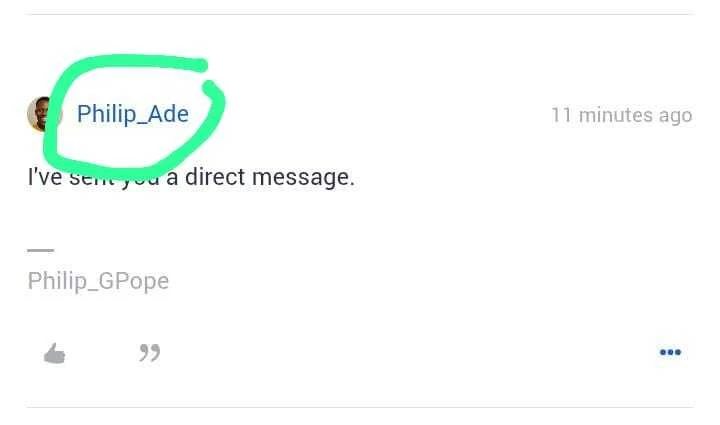
I've sent you a direct message.


Forum|alt.badge.img+1

Where would I find this direct message?


Philip_Ade
Forum|alt.badge.img+3
  • Participating Frequently
  • January 27, 2026

Click on my username and an option will pop up for you to send me a direct message 


Mirlopezr
Forum|alt.badge.img+3
  • Participating Frequently
  • January 28, 2026

Hi ​@William_Cavalier ,

I’m a PM at Singular Innovation. We specialize in implementing and hardening Airtable + Make.com workflows for investment, ops, and data-heavy teams. We are very comfortable executing directly from a detailed internal spec without redesigning architecture.

Below are the requested details.

1. Make + Airtable example

We have built multiple Make.com scenarios starting from webhooks and forms, integrating enrichment and AI, and writing structured data into Airtable CRM-style bases.

Example scenario structure we’ve implemented:

  • Webhook trigger (email forward + form submissions).

  • Normalization layer (company name, domain cleanup, payload validation).

  • Airtable search to detect existing records by domain and normalized name.

  • HTTP calls to enrichment services.

  • AI calls (LLM) to structure unstructured input into a clean JSON object.

  • Conditional routing (new vs existing records).

  • Structured writes to Airtable across multiple linked tables.

  • Intake or event logs written per execution.

  • Slack and email notifications.

  • Error handling with retries and fallback logging.

We can share Loom walkthroughs or screenshots of similar scenarios after initial alignment 

2. Similar workflow experience

Relevant prior implementations include:

  • Deal / Lead Intake Automation
    Webhook → normalization → de-duplication by company/domain → enrichment → AI structuring → Airtable CRM write → Slack notifications → audit log table.
    Used for investment pipelines and B2B inbound qualification.

  • AI-assisted Classification and Scoring Flows
    Raw, messy inputs routed through AI to generate structured JSON objects, scoring outputs, and recommended next steps. Results used to drive conditional routing and ownership assignment inside Airtable.

  • Existing Record Refresh Pipelines
    Detection of existing entities, enrichment refresh, AI re-scoring, status updates, and event logging without overwriting core identity fields.

This project closely matches workflows we already implement, especially the “new vs existing” routing, intake logging for audit/debugging, and robustness to sparse or malformed inputs.

3. Rate, time zone, availability

  • Rate:
    Hourly or fixed-price, depending on final scope.
    Typical range for this type of implementation: USD $55–70/hour, or a fixed MVP after reviewing the internal spec.

  • Time zone:
    GMT-6 / GMT-5 (LATAM), with overlap during US business hours.

  • Availability:
    Availability is flexible and can be aligned to the specific requirements, milestones, and delivery pace defined by the client and the project.
    We can adjust weekly hours and execution windows as needed during the 4–6 week implementation period.

If useful for context, we recently hosted a technical Airtable webinar focused on enterprise and investment-grade workflows, including intake pipelines, governance, and scalability patterns.

Webinar recording:
https://airtableevents.com/airtableenterprisenetworkworks-12-2025

We’re also open to a short, no-cost alignment call if you’d like to validate fit or execution approach before moving forward.

Free discovery call:
https://app.iclosed.io/e/singularagency/schedule-a-discovery-call

Happy to proceed to the next step and review the internal implementation guide.

Best regards,
Mirna
Project Manager
Singular Innovation


Flow Digital
Forum|alt.badge.img+2
  • Participating Frequently
  • January 28, 2026

Hey ​@William_Cavalier 

This project is squarely in our wheelhouse. Flow Digital is the #1 Zapier Premier Partner specializing in complex B2B integrations and automation workflows. We've built dozens of Make.com + Airtable deal intake systems for investment firms, including multi-source ingestion, AI-powered enrichment, de-duplication logic, and robust error handling.

Addressing your 3 application requirements:

1. Make + Airtable Example

We recently built a similar system for a PE firm:

  • Webhook ingestion from email parser + Typeform + Salesforce
  • Normalization layer cleaning company names and extracting domains
  • Clearbit enrichment via HTTP module
  • OpenAI GPT-4 call to structure messy deal descriptions into standardized JSON
  • Second AI call scoring investment thesis fit (1-10 scale)
  • Conditional routing: High-scoring deals → create in Airtable + notify partners; Low-scoring → archive with reasoning
  • Comprehensive audit logs in linked Intake Events table

I can share a Loom walkthrough showing the Make scenario structure, Airtable schema, and actual test runs. The scenario includes webhook handling, data normalization, API enrichment, dual AI calls with JSON validation, error handling with retries, and structured writes to Airtable with full audit trails.

Availability: We can commit 20-30 hours/week over the next 4 weeks to deliver your MVP.


Next steps: Share the Loom walkthrough and discuss your implementation guide in detail: Schedule a quick meeting here!


Flow Digital - Airtable Gold Services Partner — We're happy to help!


proboticsolutions
Forum|alt.badge.img+4

Hi ​@William_Cavalier,

I have shared all the answers and details with you in a direct message.

Please take a moment to review and let me know your thoughts.


Thank You,
Probotic Solutions
Fiverr: https://www.fiverr.com/pro_solutions9
Meeting Linkhttps://calendly.com/proboticsolutions/30min
LinkedInhttps://www.linkedin.com/in/proboticsolutions/