AirTable Powertools: Unlocking your AirTable Metadata

  • January 21, 2026
  • 4 replies
  • 54 views

SCS
Forum|alt.badge.img+2
  • New Participant

I’ve been working on AirTable for a few years now, and I’ve developed a decent set of tooling for inspecting and documenting particularly complex AirTable bases. I’ve put that functionality into a free web app where you can load and AirTable schema via API Key or via JSON upload, which will unlock functionality related to dependency mapping, formula evaluation, and client side libraries.

https://blog.scsllc.pro/airtable-powertools/

4 replies

Mike_AutomaticN
Forum|alt.badge.img+28

Hey ​@SCS,

Sounds great, but also looks sketchy lol (not saying it actually is!). No other information except for Base ID and API key fields.
I’d love to see what the tool actually does. Do you have any screenshots and/or examples to share?

I’m actually really interested.

Mike, Consultant @ Automatic Nation 
YouTube Channel


SCS
Forum|alt.badge.img+2
  • Author
  • New Participant
  • January 22, 2026

Totally understand the concern.

I always think demonstrations are better than screenshots, and most of my “interesting” screenshots are of private bases that I don’t think I should expose, so I have two options for folks to work around this

On the page, if you select “I don’t have an API key”, you can choose to load a sample schema I have created, or you can manually upload your bases schema JSON file (so you can retrieve it yourself outside of my app if you’re concerned about your API keys). 


I can tell you that the API key usage is all local to your web browser; I retrieve your metadata with the key, and then store your metadata in local storage, so it’s available the next time you visit the app (assuming you haven’t fully cleared your browser storage cache). You can validate this by looking at the “Network” tab in chrome devtools and besides the request to retrieve your key, you should see no other network requests (so I am not saving your API key in any backend service). Additionally, all of my code is available on my GitHub link (in the About tab). 

If you’d still like screenshots, I do have some pretty crazy examples from one of the primary schemas I developed this for, and it is quite complex. I suspect I could blur out some examples and anything that would be revealing to the customer. 


SCS
Forum|alt.badge.img+2
  • Author
  • New Participant
  • January 22, 2026

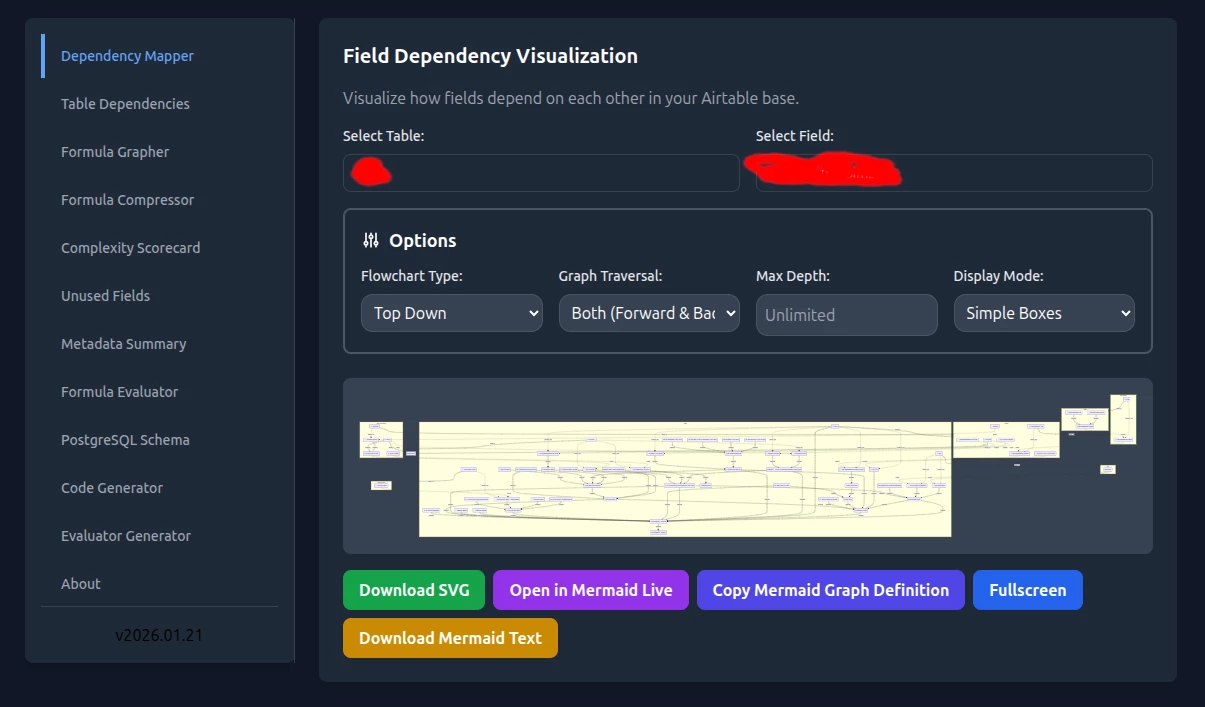
This is one of my favorites. The forward and backwards complexity (dependencies and dependents) is so complex that the mermaid preview is unusable (but you can still open the diagram in mermaid.live or download an SVG copy)


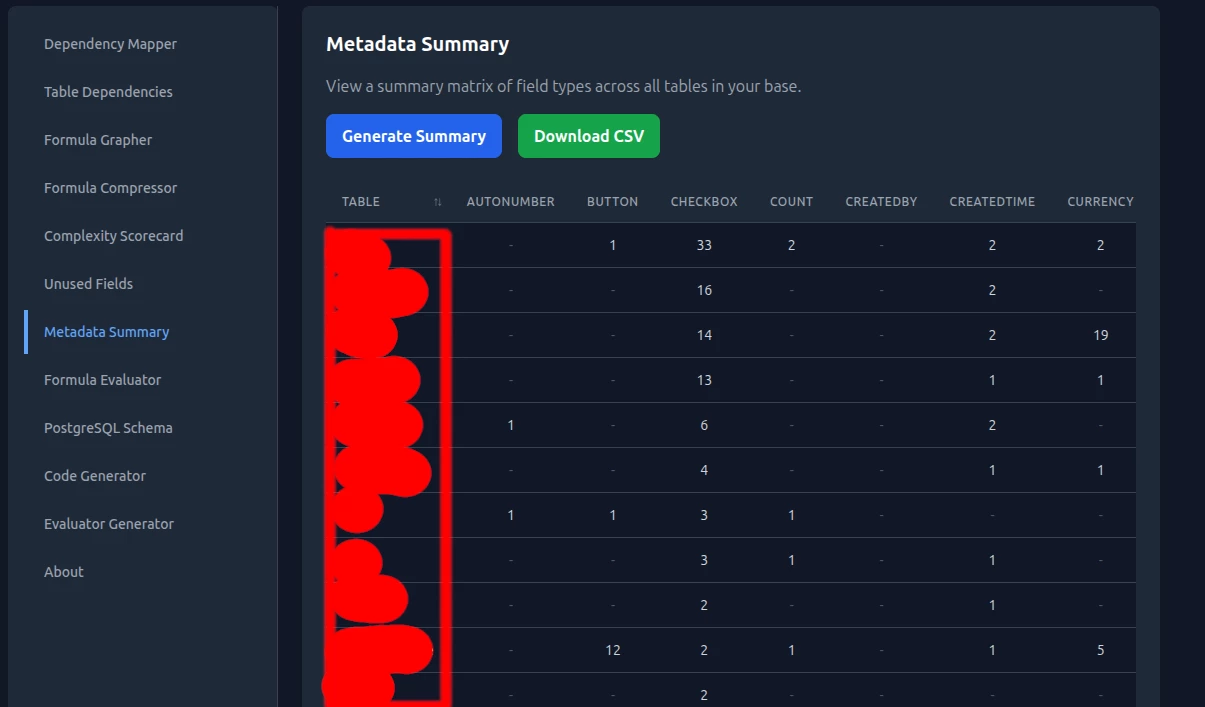
This is a breakdown of all field types per table, which can be sorted


These are just a few examples. The sample schema that comes with the app can give a decent demonstration of most features (although some features are only interesting in complex schemas)


Mike_AutomaticN
Forum|alt.badge.img+28

Hey ​@SCS,
 

Played around with the demo a bit. It is actually fun and interesting. I might be getting back to it. Thanks for sharing!!!!

Mike, Consultant @ Automatic Nation 
YouTube Channel