




Welcome to Change Makers, our series highlighting customer stories and builders making an incredible impact with Airtable. Today’s Change Maker is one of our Airtable MVPs.
Mike Bukhin (
Mike’s role has become increasingly focused on building operational systems and says “Airtable allowed us to evolve without being locked into rigid templates, and the iteration speed has been our superpower.”
The Challenge & Airtable Solution
Misha & Puff faced a common scaling challenge: critical product information scattered across multiple systems. Think spreadsheets for specs and costs, email threads for decisions, shared drives for assets, and separate tools for project management, sales and operations all in different places.
Different teams were working from different versions of the truth.
"It wasn't that any single tool was broken. It was that the system as a whole wasn't connected, and coordination became the bottleneck," explains Mike.
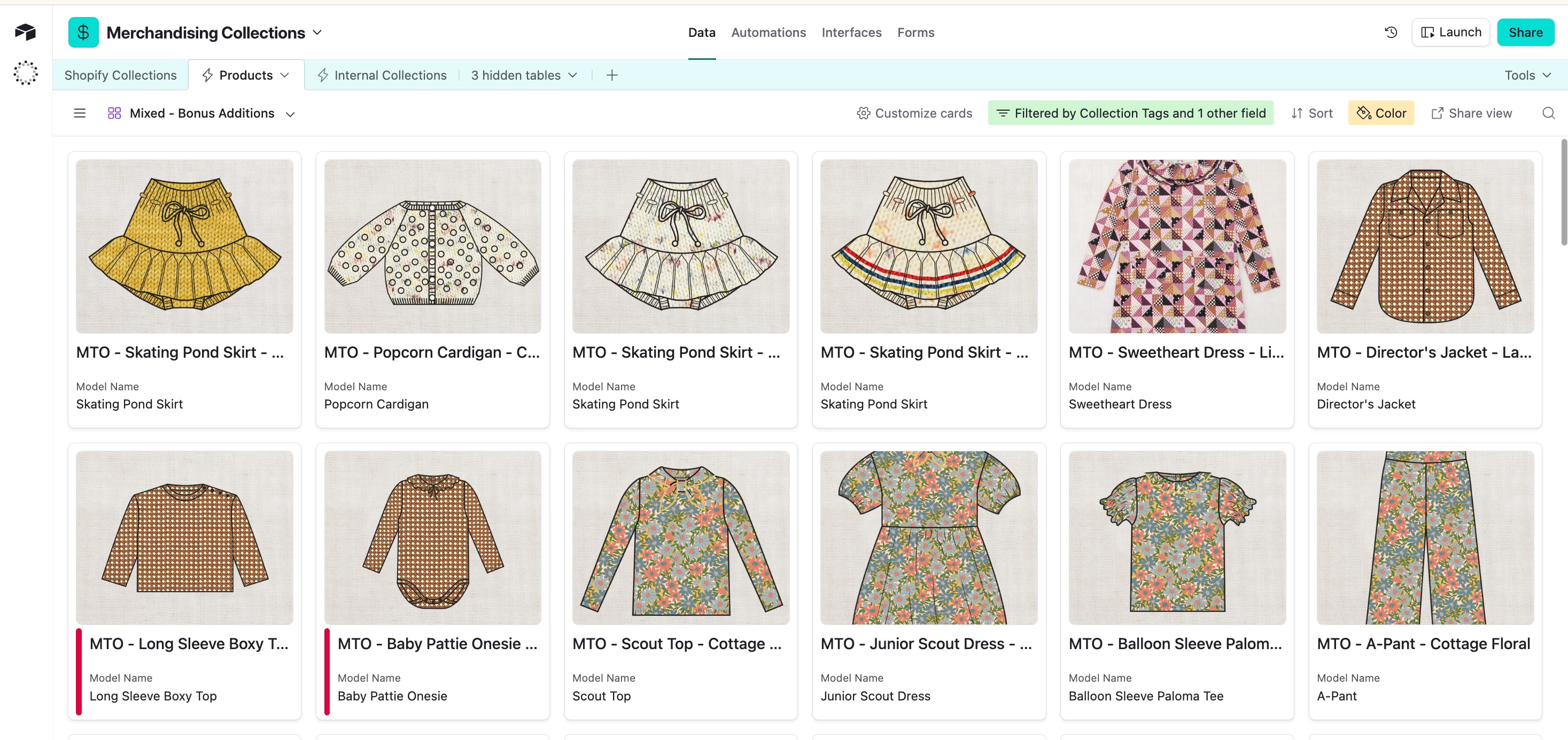
To solve this, the team built a comprehensive PLM system in Airtable that touches every department, from product ideation through design, prototyping, purchasing, manufacturing, sales, and customer experience. Two-way sync and downstream editing capabilities ensure teams can work where it makes sense while keeping everything connected and current.
They've also recently begun implementing Airtable AI for materials estimation (particularly for hand-dyed yarn with significant lead times) and data quality audits across hundreds of product data points before records advance to the next stage.
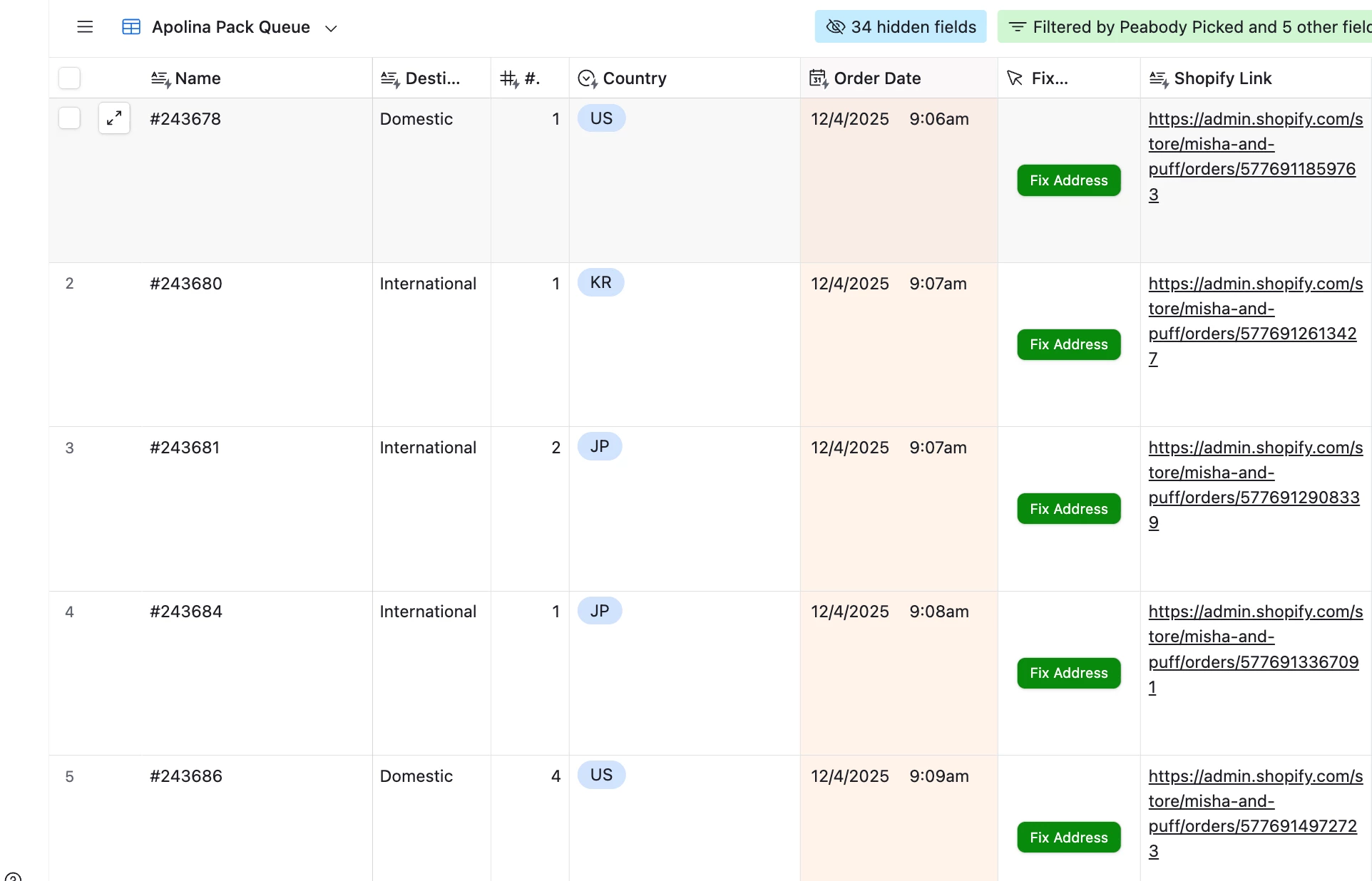
📺 Want to see it in action? Check out some of the tools and systems Mike built for Misha & Puff on Airtable below:

The Results
The impact has been transformative across multiple areas of the business. Product costing now lives in a single source of truth that automatically propagates everywhere it's needed, eliminating version control issues and alerting the right people when changes occur. When tariffs materialized this year, the team quickly built a model in Airtable to calculate true landed costs across their international manufacturing and shipping network.
Their company calendar runs on Airtable, with sales data imported so everyone can see weekly goals and performance trends. For team members who prefer traditional calendars, they publish an iCal feed directly from Airtable.
"We now generate PDFs directly out of Airtable—visual ones the creative team is willing to use—and we can guarantee the data is current because it's coming straight from the source system," says Mike. For vendors who won't use Airtable directly, they generate read-only Excel files (including purchase orders) ensuring partners always receive accurate information without manual export errors or outdated attachments.

What's Next
Mike plans to push Airtable deeper into the business while thoughtfully integrating AI capabilities.
First, his team is focused on tighter coupling with finance to ensure product and operational data flows cleanly into accounting systems, reducing reconciliations and 'two versions of reality' moments," says Mike. He also is working on expanding creative workflows to make Airtable more central for photo and creative teams, from asset tracking to shot lists and approvals.
On the AI front, they're moving beyond point solutions toward reducing friction at key handoffs through automated data quality checks, smarter audits before stage gates, and predictive capabilities for materials planning, lead times, and risk identification.
Did this use case inspire you? Drop a comment below if you’ve been using similar builds, and share how you’re using Airtable to change the way you work for a chance to be our next Change Maker spotlight!