
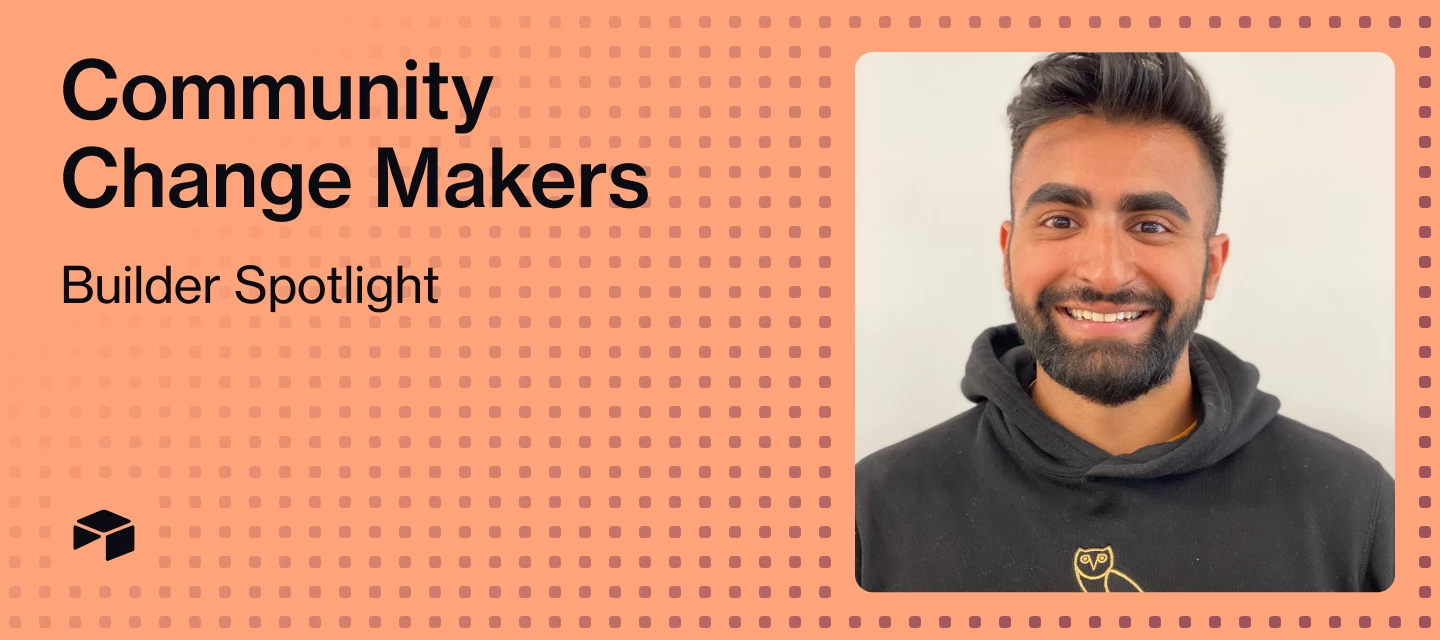


Welcome to Change Makers, our series highlighting customer stories and builders making an incredible impact with Airtable. Today’s Change Maker is an Airtable MVP who transformed his organization’s product operations into a connected, AI-powered operating system within Airtable.
About the Builder
Kassim Alani (
☕️ Coffee, tea, or something else entirely to fuel your workday?
Coffee — and I mean coffee. I'm usually on my third cup by the time the day's really rolling. My go-to is a black Americano (I make it at home on an espresso machine).
🦸 What's your superpower at work?
I'm pretty sure my coworkers would say I'm "the Airtable guy," but the real superpower is using systems to create coherence. I love taking scattered information (docs, sheets, tribal knowledge, inbox chaos) and turning it into a shared, structured way of working that helps teams focus on outcomes instead of heroics.
🤯 What's the most surprising use case you've seen (or built) in Airtable?
The AI unlocks surprised me the most, especially how far you can go when you don't want to extract everything from a document, just the few pieces that matter to power the next workflow.
We've built agents that can take a doc URL, pull out the signal, and turn it into something actionable, like mapping team relationships and dependencies in a way that's actually visible, or automatically routing the right roadmaps to the right stakeholders so people aren't staring at 50+ team plans wondering, "Which one applies to me?"
🌱 What advice would you give to someone just getting started with Airtable?
Start with one use case. Airtable is a big, component-based toolbox. "How do I use Airtable?" is like asking "How do I use spreadsheets?" It depends what you're trying to do.
Build something small, expect it to be a little messy, and treat it like reps at the gym: you'll learn patterns by doing. And don't be afraid to undo what you built and rebuild it — the cost of iterating is usually way lower than people think.
The Challenge & Airtable Solution
Before implementing Airtable, Kassim's organization struggled with information scattered across documents, sheets, and "tribal knowledge." This fragmentation created significant challenges as the company grew, making it difficult to maintain coherence from leadership down to execution teams. Product launches suffered from duplicative documentation and inconsistent communication streams.
"Organizations run in a lot of different operating models, where information is often scattered about," Kassim explains. "That becomes really complex as your organization grows or scales, keeping coherence from the top all the way down to the bottom, where the work is happening."
Kassim built a comprehensive product operating system in Airtable, starting with portfolio management and expanding to include market insights, customer feedback, and competitive intelligence. The solution leverages Airtable AI extensively, particularly Deep Match and Omni, to identify patterns in customer feedback and generate actionable insights.
One powerful workflow uses AI agents to define user problems from feature requests, provide account managers with follow-up questions for customers, and help them find similar existing requests. "Rather than saying 'think more strategically' to the account managers, we're giving them the tools to understand how product thinks," Kassim notes.
📺 Want to see it in action? Kassim shared a demo of their workflows (product operations and voice of the customer) here:
The Results
The impact of Kassim's Airtable solution has been transformative across multiple dimensions. Customer feedback processing that once took four weeks and required four different people now takes just one week with a single person handling the entire process. Partnership managers report that account planning has been reduced from 5-6 hours to just 20-30 minutes using the AI-powered tools.
Perhaps most significantly, the solution has fostered a more customer-centric culture. "What has been incredible for me to see is when product teams propose new things they want to build, they are referencing the tools and resources we built," Kassim shares. "We can have an opinion before we even go to the user or customer, which unlocks the value of synchronous time by having done our homework."
The system has also proven invaluable during organizational changes, providing continuity when key people leave and making onboarding more efficient. "Having a shared infrastructure in which anyone could plug into allowed us to be more nimble and responsive to those changes," Kassim explains.
What's Next
Kassim's team is building what he describes as a "homegrown market intelligence platform" that bridges Salesforce data with external market context and competitor information. "What we're trying to do is basically go from building aggregation tools to insight tools," he explains.
They're also exploring team topology mapping using Airtable AI to identify network relationships between teams and track how these relationships evolve over time. "It's been interesting to see quarter over quarter how the fluidity of our teams changes as the value propositions of what they're working on changes," Kassim notes.
A major goal is expanding Airtable's reach within the organization. "Right now, Airtable is mostly siloed to a subset of functions and teams. How do we get other teams to get value from the same data, but reorient it in a way that's valuable to them?" Kassim envisions building something similar to an internal search engine where 10% of the organization regularly uses Omni to answer questions about customers, R&D projects, and market trends with confidence in the data's validity.
Copy & Paste AI Prompt
Analyze this customer feedback and identify:
1. The core user problem being described
2. Any specific feature requests
3. Similar feedback we've received in the past 90 days
4. Suggested follow-up questions for the account manager
Did this use case inspire you? Drop a comment below if you're similarly using Airtable to leverage customer feedback into proactive data, and share how you're using Airtable to change the way you work for a chance to be our next Change Maker spotlight!